Kutandara means “to be together,” and that simple idea has guided us for more than 25 years.
We gather around Zimbabwean marimba music because we believe something powerful happens when people create together. A rhythm becomes a conversation. A group becomes a community. A room full of individuals becomes a circle.
At Kutandara, everyone has a place in the circle. Young and old, beginners and experienced musicians, those finding their voice and those sharing what they know — we believe each person brings something essential.
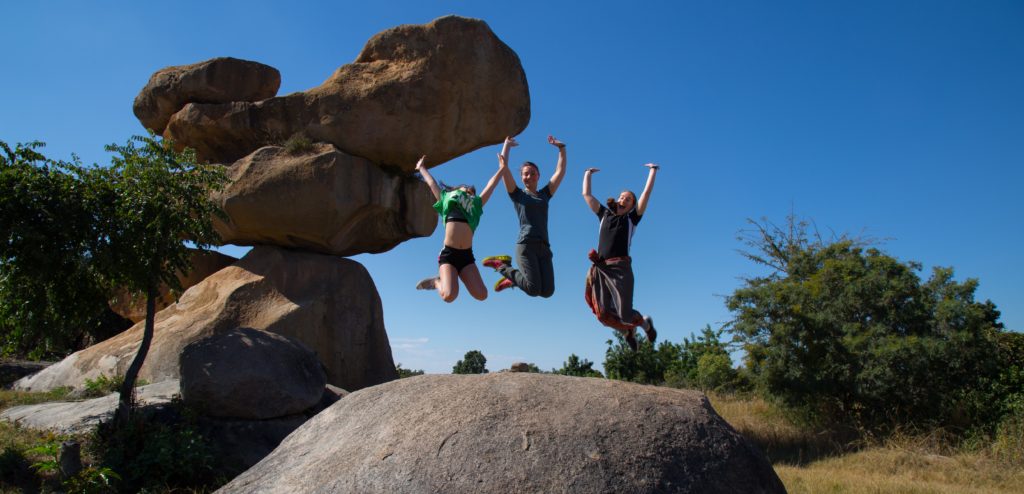
Our music is rooted in Zimbabwean traditions that teach us the beauty of interdependence: that each part matters, that listening is essential, and that together we create something greater than any one person can create alone.
We are committed to honoring the roots of this music, building meaningful relationships with the people and cultures who sustain it, and continuing to grow as a community of learners, musicians, and friends.
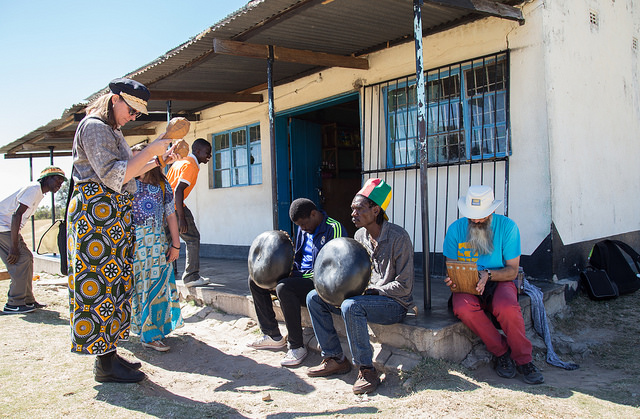
Our Mission
Our mission is to provide opportunities for people of all ages to experience the joy and interdependence of music.
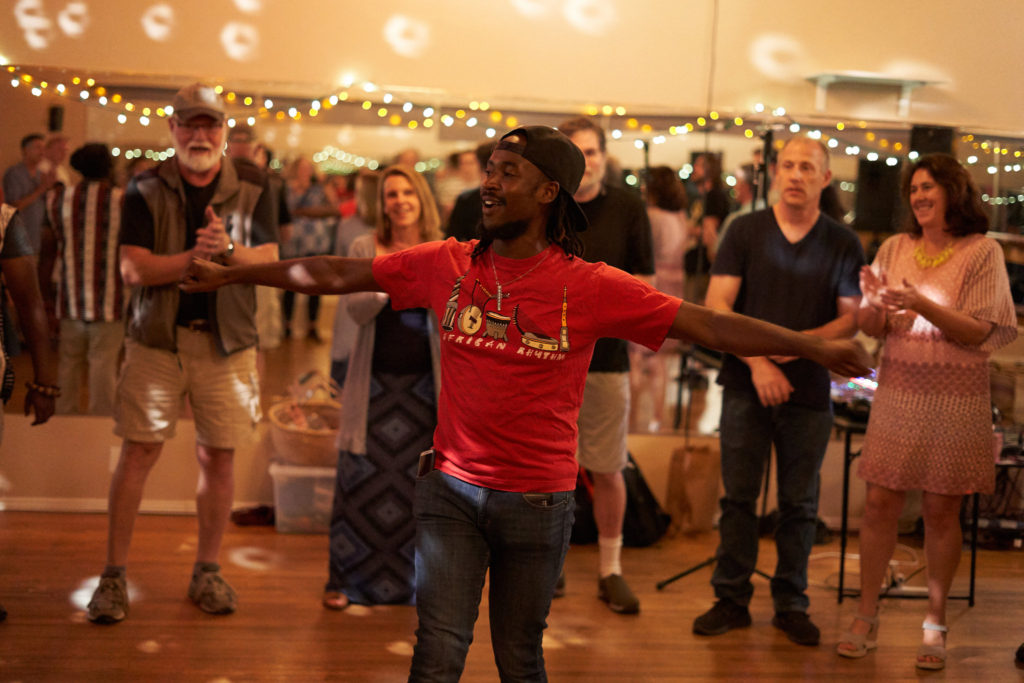
Photo Credit: Janet Meyer.
Organization Background and Context
In the late 1950’s, three musicologists set out to recover and preserve the traditional music of the people living in the area now known as Zimbabwe, which was being lost to modernization. After research and cultural inquiry, they landed on the marimba as the instrument of choice to transmit, revitalize, and teach this traditional music. The Zimbabwean marimba was developed, based on keyboard instruments from surrounding regions but not affiliated with any one tribe in Zimbabwe. The Zimbabwean marimba was deemed the new national instrument of Zimbabwe and Kwanongoma College, a teacher training college, was formed in Bulawayo.
The marimba was introduced into the schools across the country in the early 1960s as a way for young people to learn about their rich cultural and musical heritage. Much as the recorder is the universal instrument for American 3rd graders, the marimba has become ubiquitous in Zimbabwean schools. The Zimbabwean marimba and its accompanying repertoire came to the state of Washington with Dumisani Maraire, a then visiting professor at Evergreen College and the University of Washington. The music took off like wildfire and over the ensuing decades has spread across the US.
Kutandara began in 1998 when Randy McIntosh and Amy Stewart fell in love with Zimbabwean marimba music and dreamed of creating a place where others could experience its joy. Over time, that dream became something larger: a community where people of all ages come together to learn, play, and belong.
Many years later, through the formation of the Moon & Stars Foundation, that original dream has grown into something even greater: a community where people of all ages gather to learn, play, and connect through music.
Many years later, that dream continues to grow through the Moon & Stars Foundation and the Kutandara community. Together, we create opportunities for youth and adults to gather around music — learning, sharing, and building connections across generations and cultures.
Through classes, workshops, demonstrations, and performances, we invite people into the circle to discover the joy of music, deepen their understanding of themselves and one another, and experience the power of creating something together.
Moon & Stars Foundation’s Organizational Activities
- Presenting authentic, dynamic, and educational performances of African (particularly Zimbabwean) music through the formation of Foundation-based performance troupes;
- Presenting the Teen Performance groups at community and civic events for education of the community and support of charitable organizations;
- Educating people of all ages in marimba skill and repertoire building with the intention of fostering respect, connection and appreciation for Zimbabwean music along with other, related musical forms;
- Collaborating with other performing groups to present this music in unique combination and synergy with other local musical groups or genres to educate our community about the connections between Zimbabwean music and culture and our own music and culture;
- Building community at events and in educational activities based around the above described music; and
- Operating with successful best practices in education and nonprofit management